




The Stories We Inherit About Menopause
I didn’t wake up one day and decide what menopause would mean to me.
Most of us don’t.
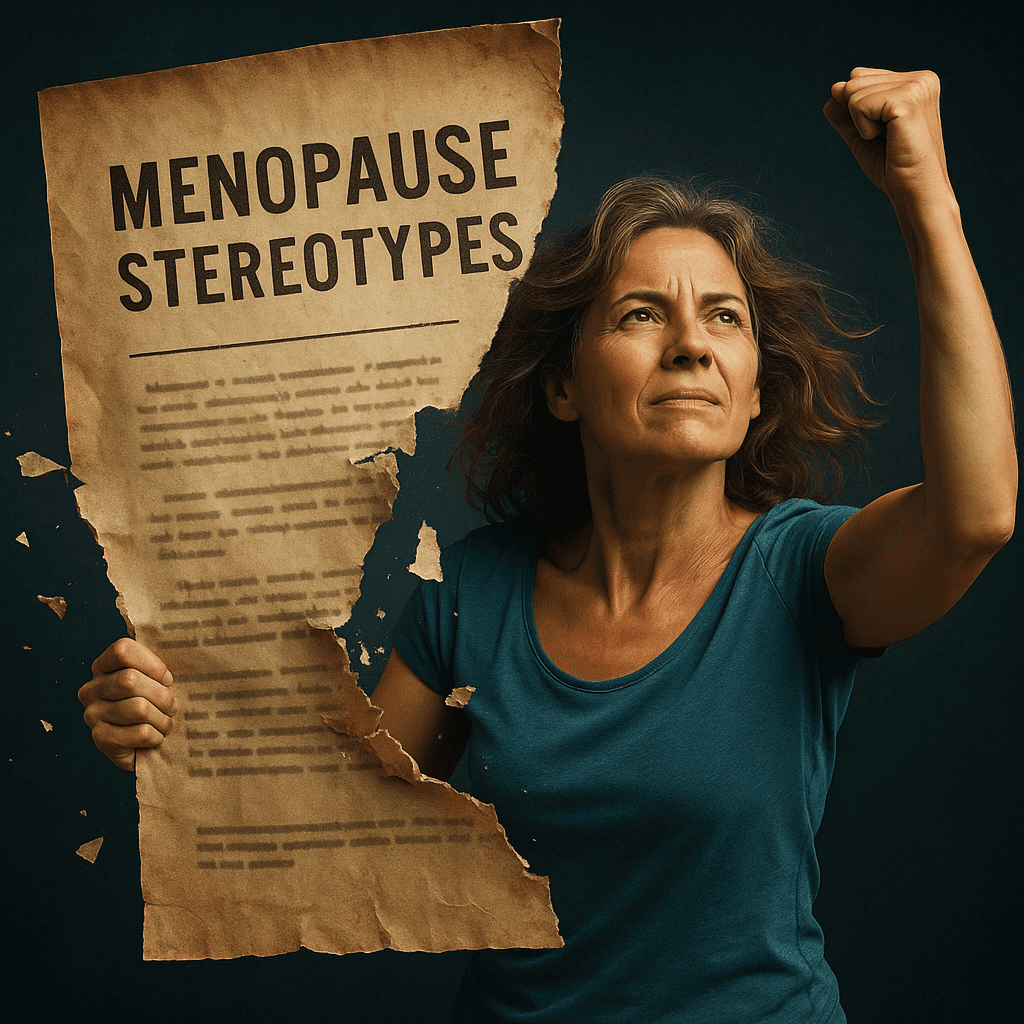
Long before the first missed period or restless night, we absorbed beliefs about menopause without consent. From half-jokes overheard at family dinners. From warnings whispered by mothers who were never given language. From magazines that treated aging like a problem to fix.
By the time symptoms arrived, the script was already written.
You might recognize it: Brace yourself. It’s downhill from here. Don’t complain. Don’t be dramatic. Be grateful it’s “just menopause.”
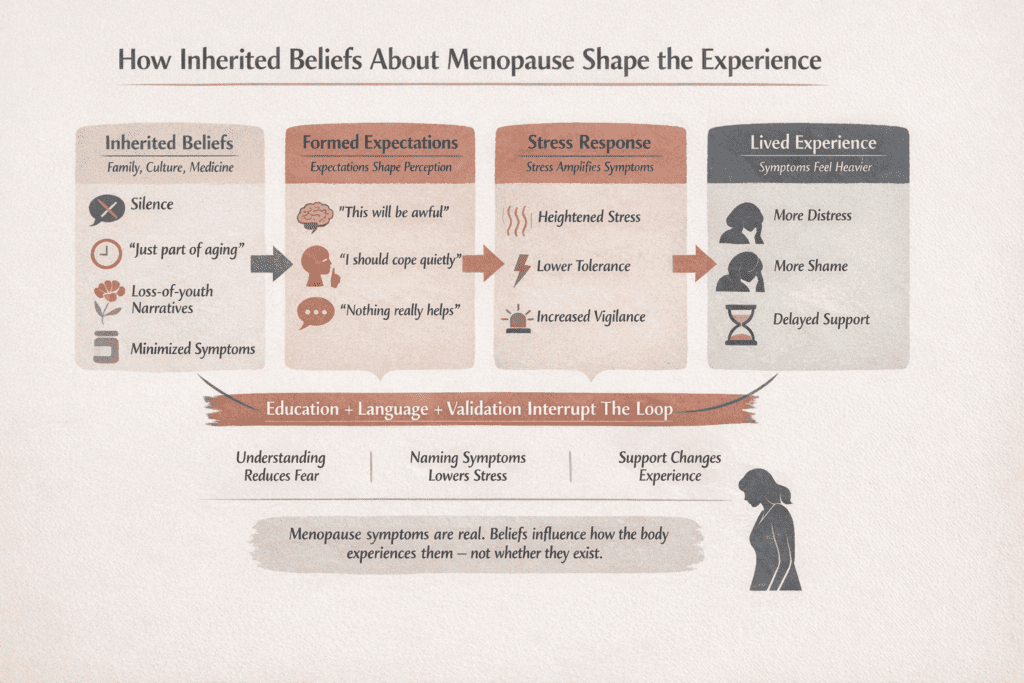
Those beliefs don’t stay abstract. They shape expectations. Expectations shape stress. Stress shapes experience.
You didn’t choose these beliefs.
But you can choose what to keep.
What We Learned Without Realizing It
How mothers, media, and medicine shaped the script
For many women, menopause education never arrived as education. It arrived as commentary.
A mother who suffered in silence. A doctor who waved symptoms away. Media that framed menopause as either comic relief or personal failure.
Even well-meaning messages carried weight: “It’s natural.” “Every woman goes through it.” “Just part of aging.”
None of those statements explain what happens, why it happens, or how to cope. They simply normalize endurance.
Institutions now acknowledge the complexity of menopause – including mood, cognition, sleep, and stress response – yet those insights haven’t fully reached exam rooms or dinner tables. Organizations like The Menopause Society and the American Psychological Association document the emotional and psychological impact, but lived education still lags.
The result? Women arrive unprepared and often ashamed of reactions they were never taught to expect.
Silence as a form of inheritance
Silence teaches, too.
When no one talked about menopause, the lesson was clear: This is not something you’re meant to understand – only survive.
That silence created gaps. Gaps fill themselves with fear. With catastrophic thinking. With the belief that if you’re struggling, you must be weak.
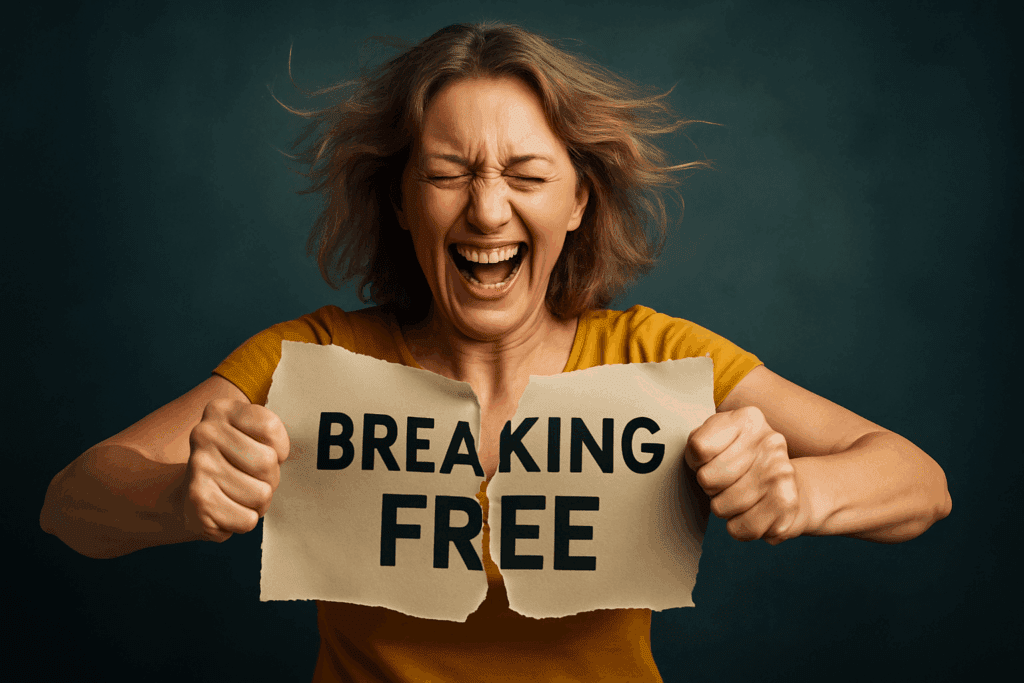
“We inherit silence until we decide to speak.”
Breaking silence doesn’t create symptoms. It gives them context.
When “normal” expectations become limiting beliefs
Calling menopause “normal” without explanation can become a trap.
If exhaustion is normal, why seek help?
If anxiety is normal, why question it?
If brain fog is normal, why feel confident at work?
What begins as reassurance turns into resignation. Normal becomes non-negotiable.
The Cultural DNA of Menopause
How different societies view menopause – decline or power shift?
Cultural menopause beliefs vary wildly.
In many Western cultures, menopause is framed as loss – of youth, fertility, relevance. The focus lands on what’s ending.
In contrast, some Indigenous and Eastern traditions recognize menopause as a status shift. In parts of Japan, for example, the transition has historically been associated with freedom from reproductive labor and increased social authority. Research summarized by global health bodies such as the World Health Organization highlights how cultural framing affects symptom reporting and distress.
Symptoms don’t exist in a vacuum. Meaning surrounds them.
Western fixation on youth vs. Indigenous and Eastern reverence
Western culture trains women to see aging as something to hide. That belief doesn’t pause for menopause – it intensifies.
When worth is tied to youth, menopause feels like erasure.
Cultures that revere elderhood don’t deny physical change. They contextualize it. The transition isn’t a disappearance. It’s a re-orientation.
The psychological cost of viewing menopause as loss
Loss-based narratives amplify stress.
Studies summarized in publications like Harvard Health Publishing show that stress perception influences symptom severity. When menopause is interpreted as failure or decay, the nervous system responds accordingly – heightened vigilance, lower tolerance, increased fatigue.
Meaning matters.
Related reading: Menopause Is Disruptive – Not a Decline
How Inherited Beliefs Shape Today’s Experiences
The mind-body feedback loop between belief and symptom severity
Beliefs don’t cause hot flashes or sleep disruption.
But they influence how the body processes them.
When symptoms are feared, ignored, or minimized, the stress response stays switched on. Cortisol rises. Sleep fragments. Emotional regulation narrows.
This isn’t “all in your head.” It’s physiology responding to interpretation.
The American Psychological Association describes this as a stress-appraisal loop: the brain’s assessment of threat directly affects physical experience.
Shame, denial, and the stress connection
Shame adds weight to symptoms that are already heavy.
Women taught to “handle it quietly” often delay support. They push through until the body forces a pause.
That delay doesn’t make menopause easier. It makes it louder.
When internalized bias turns normal change into crisis
If you believe menopause means incompetence, every memory lapse feels dangerous.
If you believe it means instability, every mood swing feels like proof.
Inherited menopause stigma doesn’t just misinform. It escalates.
Related reading: How Beliefs About Aging Can Worsen Menopause Stress
Unlearning Old Scripts – What to Keep, What to Release
Identifying the beliefs that no longer serve you
Start with inventory, not judgment.
Ask:
- What did I learn about menopause growing up?
- Which beliefs increase fear or self-doubt?
- Which ones help me adapt?
Not everything inherited is wrong. But much of it is incomplete.
Building awareness around language and emotion
Language reveals belief.
Notice phrases like:
- “I should be coping better.”
- “Other women handle this.”
- “It’s just my age.”
Those aren’t facts. They’re echoes.
“Beliefs can be passed down – but so can courage.”
Reframing menopause as adaptation, not disappearance
Menopause isn’t a vanishing. It’s an adjustment – neurological, hormonal, emotional.
Reframing doesn’t mean pretending it’s positive. It means seeing it accurately.
How to Build New, Healthy Expectations
Grounding in education and evidence, not fear
Reliable information calms the nervous system.
Organizations like The Menopause Society and long-form reporting in Psychology Today outline how hormonal shifts affect mood, cognition, and stress response – without catastrophizing.
Understanding doesn’t remove symptoms. It removes confusion.
Community-based learning and storytelling
Hearing other women speak honestly dismantles isolation.
Community doesn’t fix everything. But it changes the internal narrative from “What’s wrong with me?” to “This is shared.”
Mindset practices that foster calm and confidence
This isn’t about affirmations that bypass reality.
It’s about practices that stabilize:
- Naming symptoms without judgment
- Reducing self-blame
- Responding instead of reacting
These shift expectations from endurance to management.
Related reading: Moving From Coping to Stability During Menopause
Real Voices – Women Rewriting the Narrative
Across cultures, women are choosing clarity over silence.
A Caribbean grandmother teaching her granddaughter that menopause marked freedom, not failure.
An Asian business leader naming brain fog openly at work and adjusting expectations.
An African-American mother finally explaining what she endured – so her daughter won’t be blindsided.
These stories don’t erase difficulty. They replace secrecy with preparation.
Collective reframing doesn’t start in policy papers. It starts in conversation.
The Ripple Effect – Changing What Future Generations Believe
How open dialogue transforms daughters’ and sons’ understanding
When menopause is spoken about plainly, children learn that women’s health doesn’t end at fertility.
Sons learn empathy. Daughters learn anticipation instead of fear.
That ripple matters.
Why visibility now reshapes the next era of women’s health
Silence created today’s education gaps. Visibility can close them.
Every honest conversation weakens inherited menopause stigma. Every informed expectation reduces unnecessary distress.
What You Believe Shapes How You Experience Menopause
Beliefs about menopause don’t appear overnight. They are inherited, absorbed, and reinforced.
They shape expectations. Expectations shape stress. Stress shapes experience.
You didn’t choose the stories you were given.
But you can choose what you pass on.